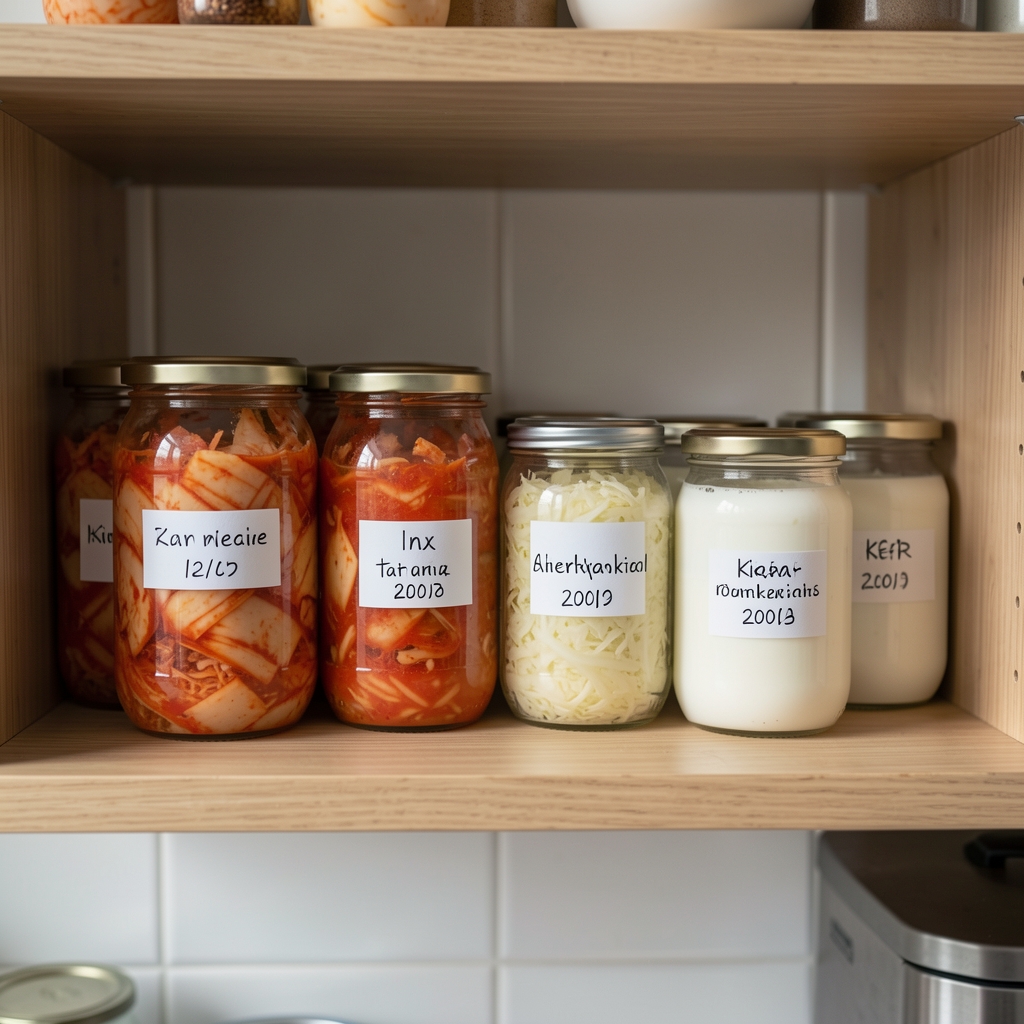
Fermentation is both an ancient culinary preservation tradition spanning millennia and a prominent subject of contemporary nutritional research. By harnessing the metabolic action of beneficial bacteria and yeasts, fermentation alters food flavour, improves texture, extends shelf life, and breaks down complex sugars. For adults over 40, exploring fermented foods represents a flavorful, sustainable way to diversify dietary inputs without relying on commercial supplements.
This guide categorises common fermented foods, provides practical label-reading and storage guidance, and explains the critical distinction between live-culture foods and pasteurised commercial products.
What Fermentation Does to Food Chemistry
During fermentation, live microorganisms consume natural carbohydrates (sugars and starches) within the raw food, converting them into organic acids (such as lactic and acetic acid), alcohol, or carbon dioxide. This process naturally lowers the pH, inhibiting pathogenic bacteria and producing characteristic tangy, sour, or lightly effervescent profiles.
The Three Broad Categories of Fermented Foods
1. Dairy-Based
Live-culture yoghurt, milk kefir, and traditional aged cheeses. Lactic acid bacteria break down lactose into lactic acid, significantly increasing dairy digestibility.
2. Vegetable-Based
Sauerkraut, kimchi, and fermented pickles. Typically fermented via naturally occurring lactobacilli in a salt brine; rich in organic acids, vitamins, and fibres.
3. Legume & Grain
Tempeh, miso paste, sourdough, and natto. Fermentation breaks down phytates and enzyme inhibitors, improving the bioavailability of minerals like iron and zinc.
Comparing Common Fermented Foods
| Food Item | Primary Substrate | Live Microbes Present? | Storage & Serving Note |
|---|---|---|---|
| Live-Culture Yoghurt | Pasteurised Milk | Yes (if labelled 'Live/Active') | Keep refrigerated (0–5°C); ideal with berries and oats. |
| Traditional Kefir | Milk or Sugar Water | Yes (diverse bacterial/yeast matrix) | Refrigerate; tangy effervescent drink or smoothie base. |
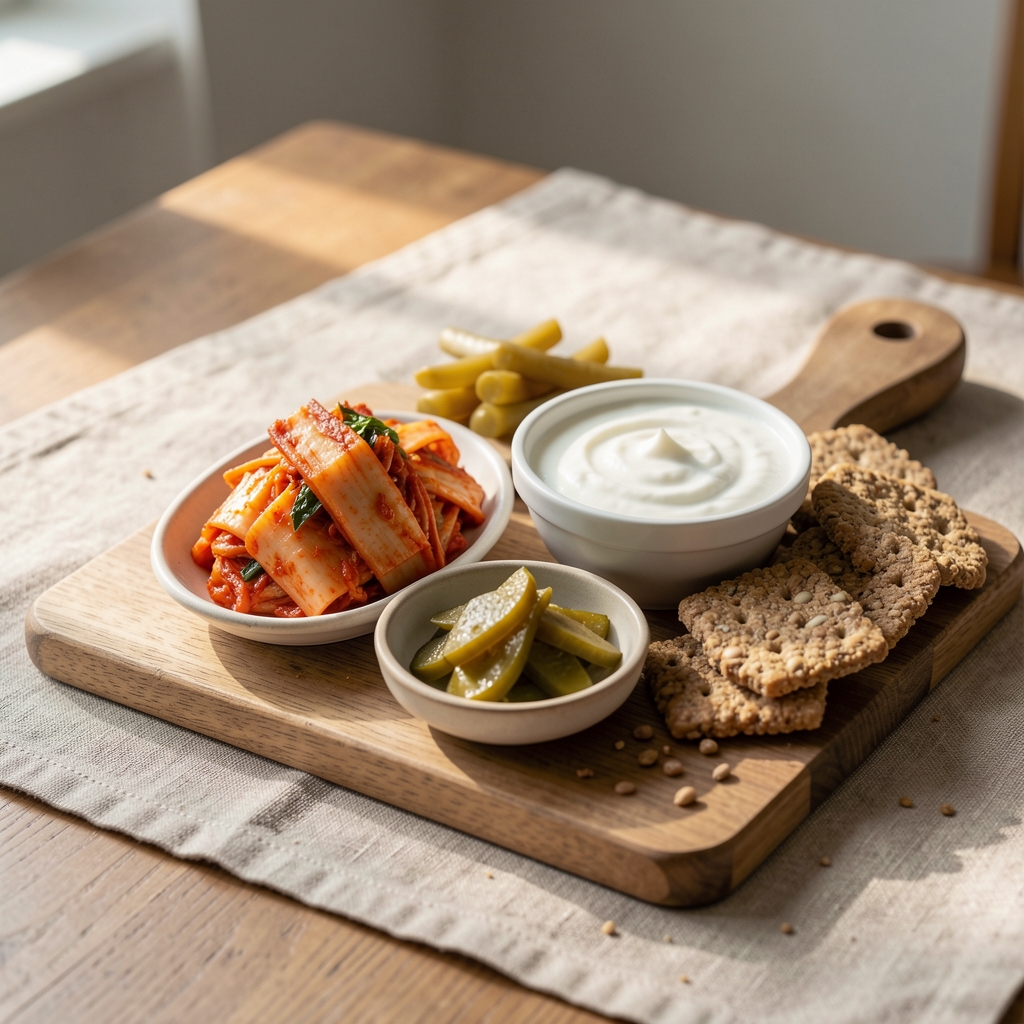
| Raw Sauerkraut / Kimchi | Cabbage, Salt & Spices | Yes (unpasteurised chilled) | Refrigerate after opening; serve 1–2 tablespoons with meals. |
| Traditional Miso Paste | Fermented Soybeans & Koji | Yes (unpasteurised) | Store in fridge; stir into warm, not boiling, water or broth. |
| Sourdough Bread | Wheat / Rye Flour & Water | No (cultures deactivated by baking) | Baking destroys live bacteria, but fermentation pre-digests gluten and starches. |
Crucial Label Insight: Pasteurisation vs Raw
Many supermarket pickles, jarred sauerkrauts, and shelf-stable kimchis are heat pasteurised after fermentation to achieve indefinite room-temperature shelf life. While pasteurised products retain flavour and organic acids, the heat destroys live microbial cultures. Look for products in the chilled section with labels stating "unpasteurised" or "contains live cultures".
Sodium and Portion Considerations
Vegetable fermentations (such as kimchi and sauerkraut) require salt to prevent spoilage and encourage lactic acid bacteria. For adults monitoring cardiovascular health or sodium intake, eating small portions (e.g. 1 to 2 tablespoons) as a condiment alongside main meals is the traditional, evidence-informed approach.
Key Takeaways
- Fermentation enhances food digestiveness, flavour complexity, and shelf stability.
- Look for unpasteurised chilled products to ensure live microbial cultures are present.
- Baking sourdough eliminates live bacteria, but fermentation improves starch and mineral availability.
- Enjoy small, regular portions as part of a varied, balanced diet.
Frequently Asked Questions
Can I make fermented foods safely at home?
Yes, home fermentation of sauerkraut, kimchi, and kefir is straightforward when following strict hygiene practices, proper salt ratios, and clean equipment. If an aroma or appearance smells putrid or develops surface mold, discard the batch.
Do fermented foods contain histamine?
Yes. Microbial fermentation produces biogenic amines, including histamine. Individuals with diagnosed histamine intolerance or mast cell activation disorders should exercise caution and seek guidance from their medical specialist.
Medical Disclaimer
This culinary guide is for general education. If you are pregnant, immunocompromised, or on a sodium-restricted diet for renal or cardiovascular management, consult your GP or dietitian for individualized nutritional advice.