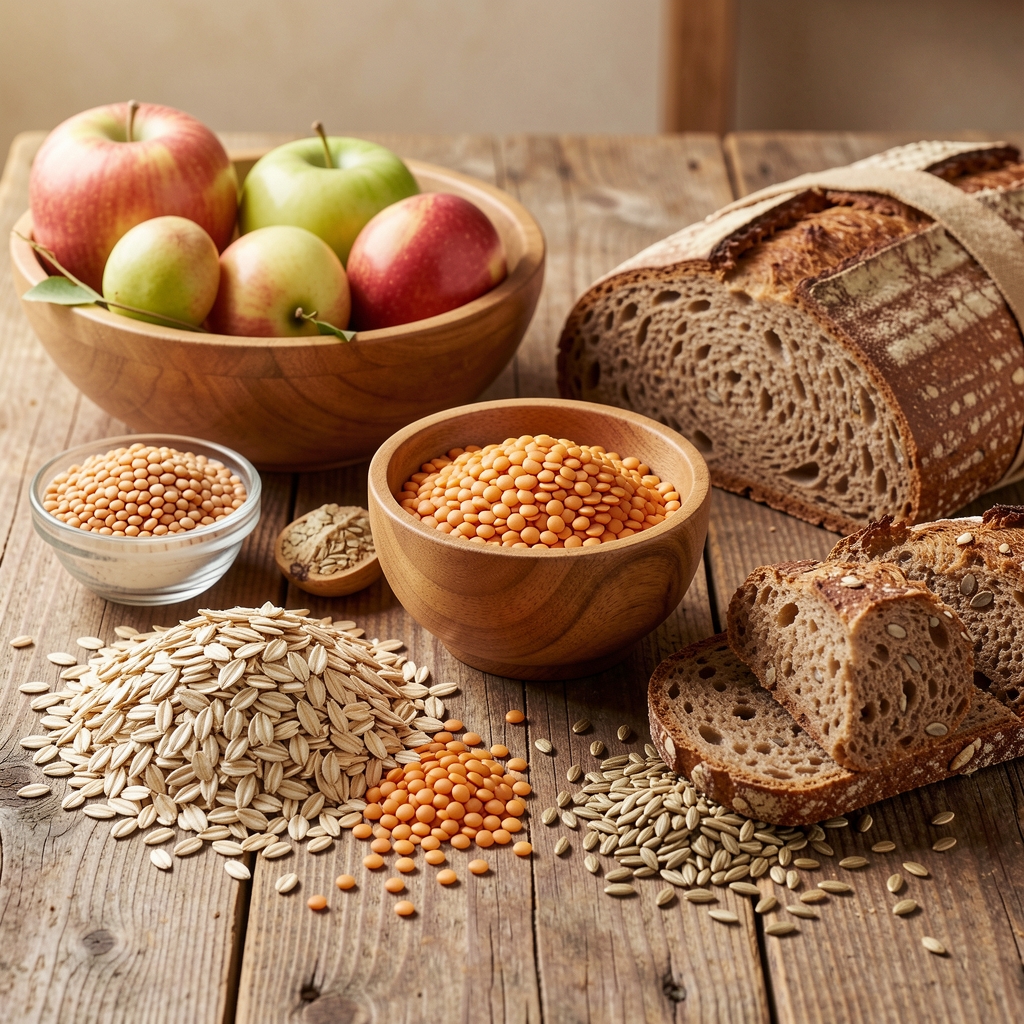
Dietary fibre is a collective scientific umbrella term describing the non-digestible carbohydrates and lignin found naturally in plant foods. Rather than being broken down by human enzymes in the stomach or small intestine, fibre travels largely intact to the large bowel. For adults over 40, understanding how different fibres function is one of the most effective, evidence-backed routes to supporting digestive comfort and long-term metabolic health.
This guide explores the distinct classes of fibre, examines standard UK public health benchmarks, and outlines a practical, paced four-week framework for expanding your dietary variety without gastrointestinal distress.
The Three Functional Classes of Fibre
Natural whole foods rarely contain just one isolated fibre type; they contain complex structural matrices combining several varieties:
1. Soluble Fibre
Dissolves in water to form a viscous gel. Found in oats, barley, flaxseeds, psyllium, apples, and root vegetables. Helps slow gastric emptying and supports healthy blood lipid management.
2. Insoluble Fibre
Does not dissolve in water; adds bulk to stool and promotes regular intestinal transit. Abundant in whole wheat, bran, nuts, seeds, celery, and the skins of vegetables and fruit.
3. Prebiotic / Fermentable
Specific fibres (such as inulin, fructooligosaccharides, and resistant starch) fermented by colonic bacteria to produce beneficial short-chain fatty acids (SCFAs).
UK Dietary Guidelines & Common Food Portions
According to the UK Scientific Advisory Committee on Nutrition (SACN) and NHS public health guidance, the recommended adult intake for dietary fibre is 30 grams per day. However, National Diet and Nutrition Survey (NDNS) data indicates that the average UK adult consumes only around 18–20 grams daily.
| Food Item | Typical Serving Size | Approximate Fibre Content | Primary Fibre Category |
|---|---|---|---|
| Rolled Oats / Porridge | 45g dry (approx. 1 bowl) | 4.2g | Soluble (Beta-glucan) & Insoluble |
| Cooked Lentils / Chickpeas | 130g (half a 400g drained can) | 7.8g | Fermentable / Insoluble |
| Wholemeal Bread | 2 medium slices | 5.0g | Insoluble & Resistant Starch |
| Medium Apple (with skin) | 1 medium (approx. 150g) | 3.6g | Soluble (Pectin) & Insoluble |
| Steamed Broccoli / Greens | 80g (standard portion) | 2.8g | Insoluble & Soluble |
| Chia or Flax Seeds | 1 tablespoon (15g) | 4.5g | Soluble mucilage & Insoluble |
The Golden Rule: Gradual Pacing and Adequate Hydration
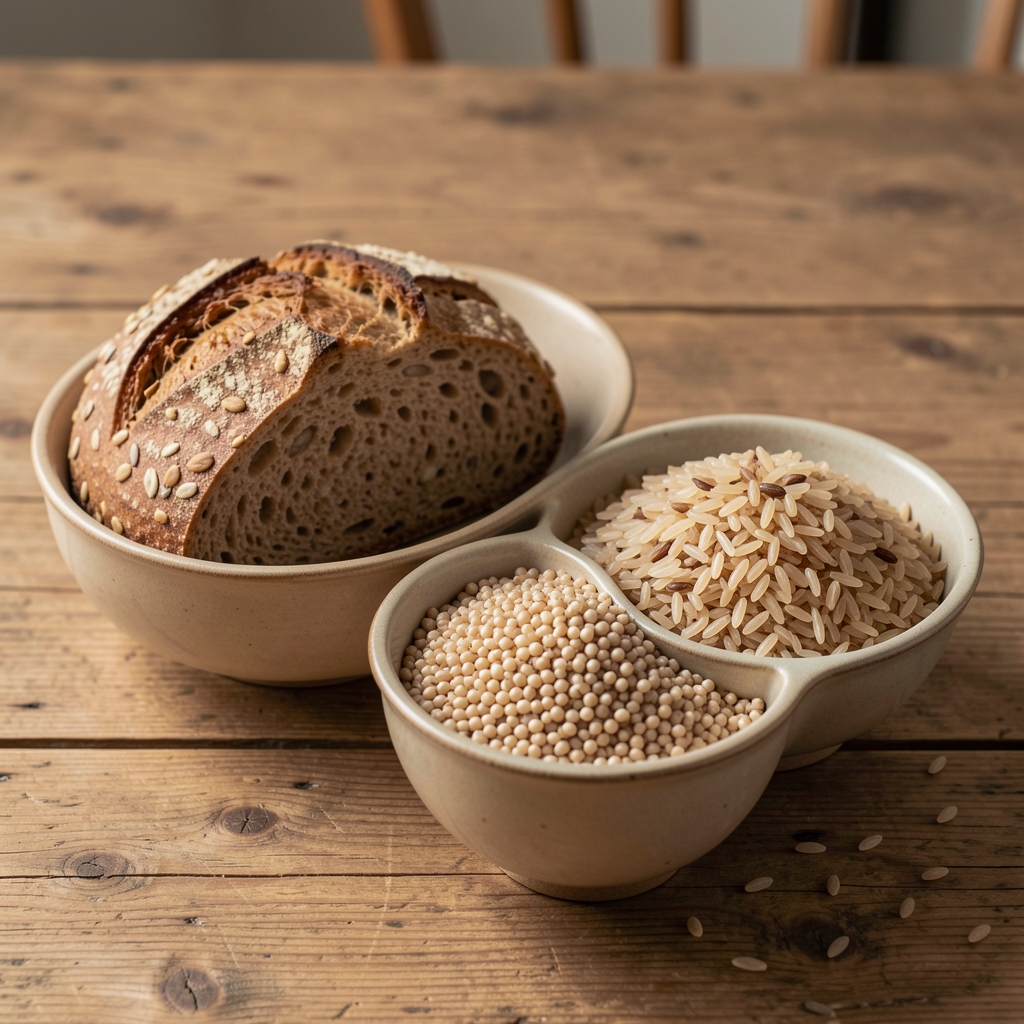
Attempting to double your daily fibre intake overnight can lead to rapid microbial gas production, bloating, and abdominal cramping. Introducing fibre gradually over several weeks allows your gut microbiome and intestinal motility to adapt smoothly. Crucially, increasing fibre without simultaneously increasing fluid intake can result in sluggish bowel transit. Aim for 6–8 glasses (1.5 to 2 litres) of water or herbal fluids daily.
A Gentle 4-Week Fibre Integration Framework
- Week 1 (Hydration & Seeds): Establish consistent daily water intake and add a single teaspoon of chia or ground flaxseeds to morning porridge or yoghurt.
- Week 2 (Wholegrain Swaps): Transition refined white carbohydrates (bread, rice, pasta) to wholemeal or 50/50 alternatives on most days.
- Week 3 (Legumes & Pulses): Incorporate cooked lentils, black beans, or chickpeas into soups, stews, or salads twice a week.
- Week 4 (Skin & Spectrum): Keep edible skins on fruit and root vegetables, and assess digestive comfort before increasing portions further.
Key Takeaways
- Aiming towards the UK 30g daily fibre benchmark supports intestinal transit and nourishes the microbiome.
- A balance of soluble, insoluble, and prebiotic fibres from diverse whole foods is preferable to isolated fibre supplements.
- Pace your increases over 3–4 weeks and maintain adequate daily hydration to avoid bloating.
- Discuss severe or sudden changes in bowel habits with your GP.
Frequently Asked Questions
Why does increasing fibre sometimes cause bloating?
When fermentable fibres enter the colon, resident bacteria actively break them down, generating gases (hydrogen, methane, carbon dioxide) as natural metabolic byproducts. When fibre is increased gradually, the bacterial community adjusts its metabolic rate, usually reducing gas symptoms over time.
Are fibre supplements as effective as whole foods?
While isolated fibre supplements (such as psyllium husk or inulin) can be useful in specific situations, whole plant foods provide a complex synergy of diverse fibre types, essential vitamins, minerals, and bioactive polyphenols that single-ingredient supplements cannot replicate.
Medical Disclaimer
This article reflects standard UK nutritional guidance and is for educational purposes only. If you have been diagnosed with a stricture, inflammatory bowel disease, or irritable bowel syndrome (IBS), consult a registered dietitian or your GP before significantly altering your fibre intake.